Essential Outdoor Power Tools for Texas Yard Work
For Texas yard work, you'll need a mower suited to your terrain—self-propelled models for hills, battery-powered for small flat yards. Add quality edgers and trimmers with durable steel to handle tough Texas soils.
Include leaf blowers for debris management, pruning tools for tree maintenance, and appropriate tillers for your soil type. Don't forget aerification equipment for dense clay soils. The right power tools will transform your property maintenance from exhausting to efficient.
Choosing the Right Lawn Mower for Texas Terrain
When tackling yard work in Texas, selecting the appropriate lawn mower can make all the difference between a frustrating chore and an efficient task. Your terrain type should guide your choice—flat lawns accommodate most mowers, while hills require self-propelled models with rear-wheel or all-wheel drive for better traction.
For small, flat yards with fine Bermuda or Zoysia grass, consider battery-powered mowers for quiet, eco-friendly operation. Homeowners with steep hills or rough terrain should invest in AWD mowers that provide enhanced traction and stability on challenging landscapes. Larger or rougher properties benefit from gas-powered options with superior cutting power and mulching and side discharge options that handle thicker Texas grasses.
If you're maintaining over an acre or traversing numerous obstacles, a riding mower—particularly a zero-turn model—will save you time and energy while effectively managing Texas's diverse landscapes.
Precision Trimming and Edging for Professional Results
Beyond choosing the right lawn mower, achieving a truly polished Texas yard requires mastering the art of precision edging and trimming. Gas-powered models like the Echo PE-225 deliver professional results in tough Texas soils, while electric options offer quieter operation for smaller properties. For manual control enthusiasts, tools featuring heavy-duty steel provide exceptional durability for cutting through Texas clay and compacted soil.
For the cleanest cuts, select an edger with adjustable depth control and four-wheel designs that maintain stability along walkways and flowerbeds. You'll achieve sharper lines by edging after mowing, using a slight pivot for beveled edges that help encourage water runoff.
Don't overlook blade sharpening techniques—regular maintenance secures clean cuts through tough roots. When storing edgers properly between uses, keep them in dry locations to prevent rust and uphold their professional-grade performance all season long.
Managing Debris with Powerful Leaf Blowers
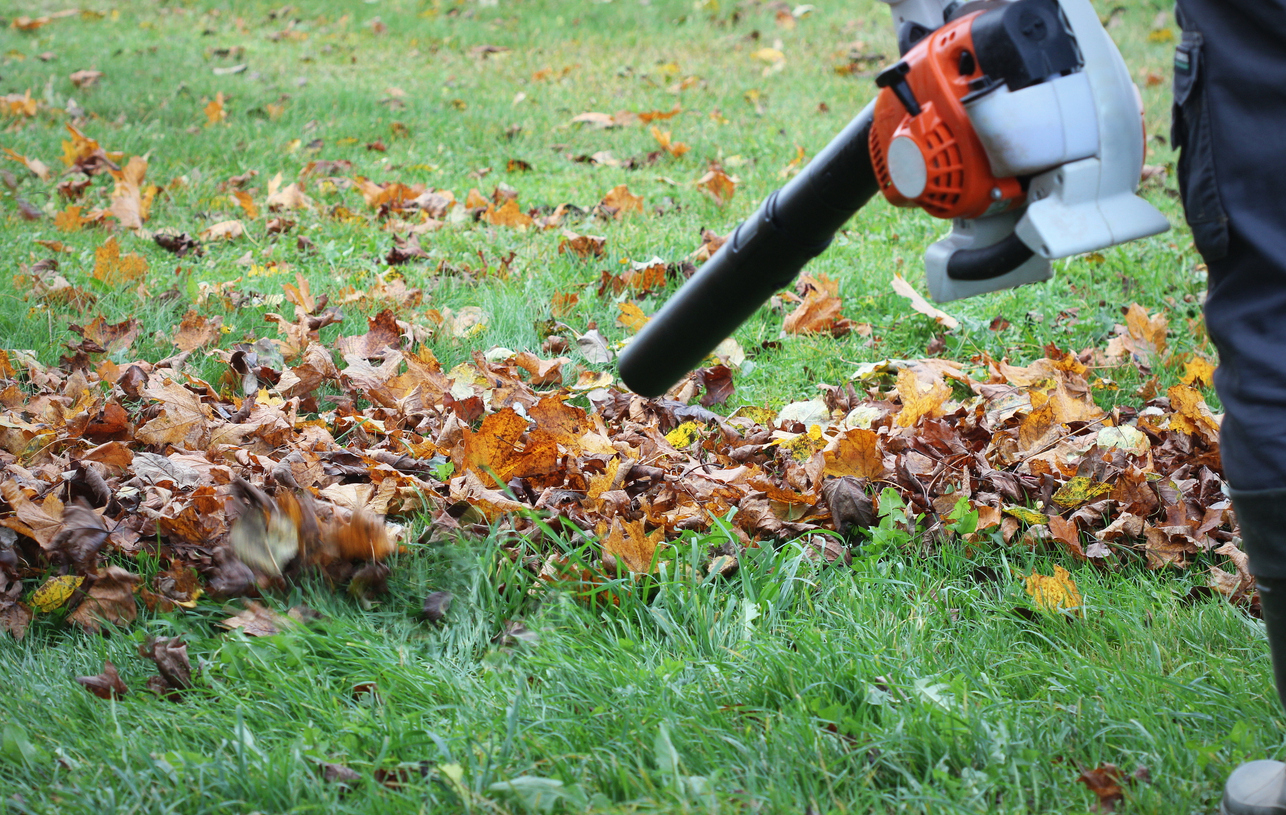
Keeping Texas yards pristine requires more than just mowing and edging—you'll need a reliable leaf blower to manage the constant onslaught of debris. When selecting your equipment, consider reducing environmental impact by choosing electric alternatives, which produce significantly less pollution than gas models; studies show that one hour of operating some commercial gas blowers can emit smog-forming pollution comparable to driving a car about 1,100 miles.
With recent Texas law now limiting cities from banning gas-powered lawn equipment, individual homeowners often have to make their own choices about switching to cleaner tools.
Maintain a 50-foot distance from people and pets for safety and to reduce noise disturbance. Pre-wet dusty areas before blowing to minimize airborne particulates. Operate at the lowest effective throttle speed to decrease noise pollution. Blow debris onto vegetated areas or collect it in paper bags or bins for proper disposal instead of pushing it into streets and storm drains.
Tree and Shrub Maintenance with Chainsaws and Pruners
Taming the wild growth of Texas trees and shrubs requires specialized tools that match the size and nature of each cutting job. For branches under 2 cm, use bypass pruners; loppers handle limbs up to 7 cm, while pruning saws manage thicker branches. Reserve chainsaws for quick cuts exceeding 10 cm diameter, and consider leaving larger or technical cuts—especially near structures or power lines—to qualified arborists.
Employ proper pruning techniques to avoid tree damage by making clean cuts at the branch collar—never flush with the trunk. The three-cut method prevents bark tearing: undercut first, then top cut farther out, followed by a final collar cut. When performing this work, remember that safety equipment such as gloves, eye protection, and hearing protection should always be worn regardless of the tool being used.
Consider seasonal timing for ideal tree health by pruning during late winter dormancy rather than fall, when fungal infections are more likely to occur.
Preparing Texas Soil with Specialized Equipment
Texas soil preparation calls for both diagnostic understanding and the right equipment before you dig in. Soil testing reveals exactly what your yard needs—whether it's heavy clay near Dallas–Fort Worth, mixed soils in Central Texas, or sandier profiles closer to the coast. Your rototiller selection should match your soil type; opt for models with adjustable depth settings for Texas's variable conditions.
Front-tine tillers work well for mixing amendments into previously worked soil. Rear-tine tillers provide more power for breaking up compacted clay soils. Soil aerification equipment creates essential oxygen pathways in dense soils. Electric cultivators offer gentler soil preparation for smaller areas or spot tillage. Attempting landscape work without proper soil preparation is like building on a shaky foundation that will compromise long-term results.
For larger properties, consider specialized bedding equipment that creates raised planting areas, particularly valuable in poorly drained regions. Remember to incorporate organic matter during preparation to improve soil structure and plant success.
Must-Have Power Tools for Year-Round Property Maintenance
With soil properly prepared, your attention now shifts to the equipment that will maintain your Texas landscape throughout the seasons. Start with a quality lawn mower that matches your property size—gas-powered for large areas, electric for urban yards, or riding mowers for extensive properties.
Complement your arsenal with string trimmers and edgers to achieve precise weed control strategies around beds and sidewalks. Battery-powered models offer excellent maneuverability without disturbing neighbors. Consider using aerators to promote deeper roots and improve overall lawn health in compacted Texas soils.
For debris management and waterflow optimization, invest in a leaf blower that prevents drainage clogs and lawn damage.
Don't overlook the value of a pressure washer for cleaning outdoor surfaces and a chainsaw for tree maintenance. In Texas's varied climate, these tools will keep your property looking pristine year-round while protecting your investment.